Roblox Build and Scene Generator: How Prompt-Based Game Creation Works
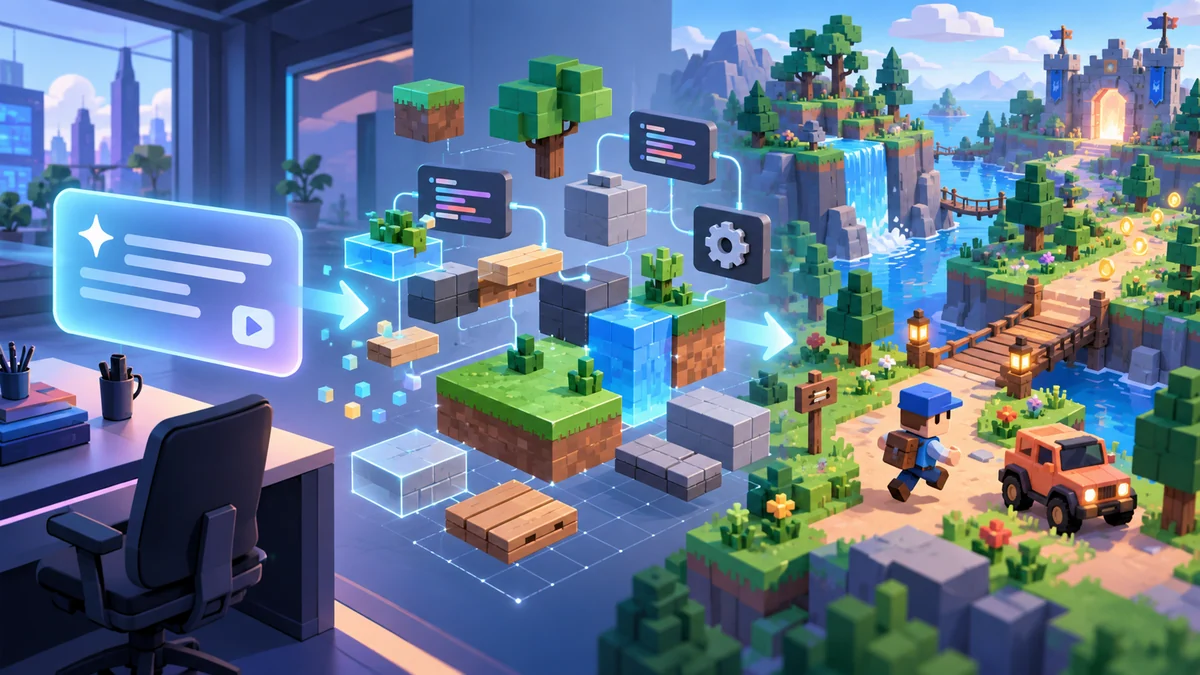
“Create a cozy adventure game on a forest island where players avoid obstacles and protect a lighthouse at night.” A prompt like that may soon be enough to start a Roblox project from a phone. Roblox is connecting Build, its mobile-first creation tool, with Studio and preparing Scene Generator to turn text and reference images into editable game layouts.
That does not mean one sentence will automatically produce a polished hit. Roblox describes Build as an entry point for making, testing and iterating on a game, while Scene Generator is still a planned feature rather than a finished tool available to everyone. The RDC 2026 announcement from Roblox Newsroom says availability and features will vary by age and region.
What Roblox Build is
Build is a new creation tab inside the Roblox app. The aim is to let a user describe a game’s setting, mood and rules in ordinary language, receive a playable starting point, change it through conversation, test it, share it with friends and eventually publish it.
Roblox Studio remains the more powerful environment. It gives creators direct control over code, 3D assets, physics, interfaces and production systems, but that depth also makes it harder for a first-time developer to begin. Build is designed as a lower-friction front door, with deeper work moving into Studio when a project needs precise code, art or performance tuning.
The early numbers suggest that the tool is attracting people who were not already Studio users. Roblox says creators published approximately 9,000 games during Build’s early alpha, based on data through September 1, 2026. In that early creator group, Roblox reports that 71% were newcomers to Studio.
Those figures show increased access, not proof that AI-made games are automatically successful. They measure creation and publishing activity, not player retention, quality or creator income.
How a prompt becomes a game
Build is not simply an image generator. A game needs rules that continue to work while a player moves, collides with objects, succeeds, fails and returns later. Roblox describes its AI creation layer as a system of models and tools built around the complexity of games rather than one model producing a static scene.
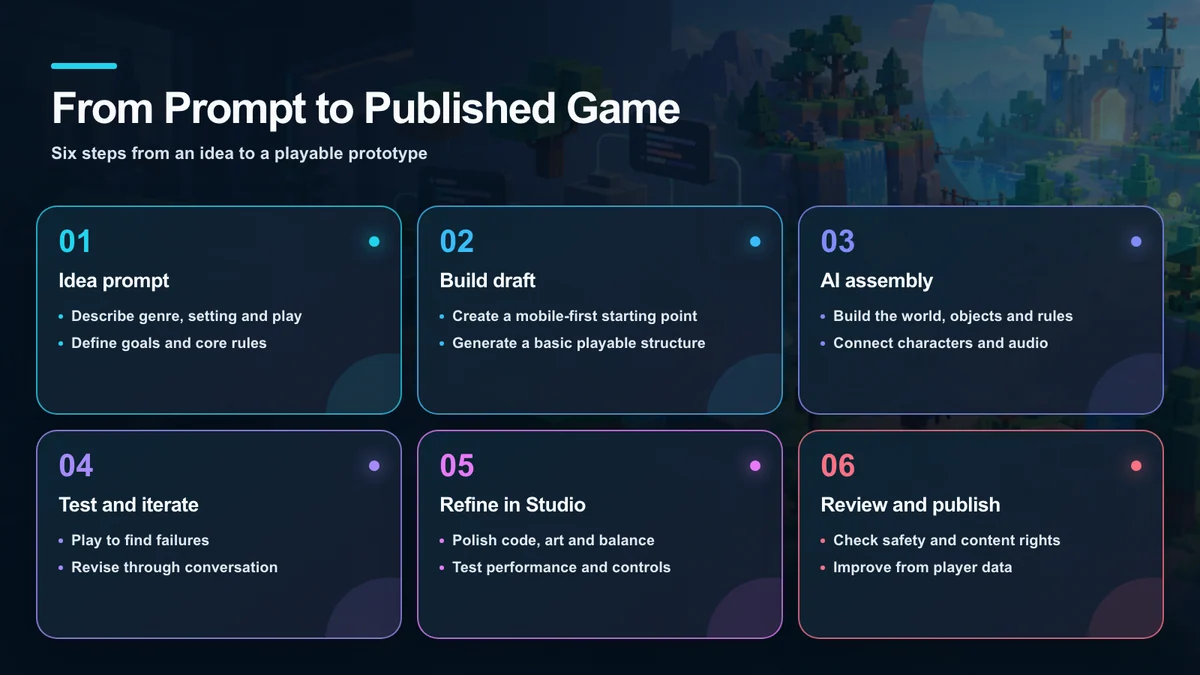
A practical workflow looks like this:
- Describe the genre, setting, core action and player goal.
- Use Build to create a playable starting structure.
- Run the game and test movement, collisions, objectives and difficulty.
- Ask for revisions and add or replace assets through iteration.
- Move into Studio for detailed code, art, interface and balance work.
- Check safety, performance and content rights before publishing.
- Improve the game using real player behavior rather than the original prompt alone.
The testing stage matters because a visually convincing door still has to open, a vehicle has to respond to controls and an enemy has to follow rules consistently. Generating a scene is only the first part of building an interactive system.
What Scene Generator adds
Scene Generator is intended to create a larger, editable layout from a text prompt and a reference image. Instead of asking for one tree, vehicle or building at a time, a creator could ask for terrain, object placement, paths and atmosphere that work together as a scene.
Roblox says the result will be a functional layout that can be refined in Studio, not a video that can only be watched. The company plans to make the prompt-to-scene capability available across both Build and Studio, with greater control in Studio.
As of September 21, 2026, Roblox says Scene Generator is coming later in the year. It should not be described as a generally available feature yet, and its launch timing may still differ by account, age and region.
Why creators may find it useful
A faster first prototype
Starting from a playable draft can shorten the time between an idea and the first useful test. A creator can discover early whether the central activity is fun before spending days building every asset by hand.
A lower technical barrier
People who cannot yet script a full game can describe rules in plain language and learn by changing the output. The 71% figure for Build users with no prior Studio experience is the clearest early sign of this effect.
A path from phone to desktop
Roblox is working toward tighter links between Build and Studio. The useful model is not “mobile replaces Studio,” but “mobile captures and tests an idea, then Studio finishes it.”
More automation around iteration
Roblox has also discussed AI-assisted playtesting, analytics and experimentation. These tools could help identify bugs, explain player metrics and suggest tests. The creator’s role may shift from manually placing every object toward defining goals, judging results and deciding what should change.
Why automatic generation does not guarantee a hit
A fast prototype does not create a reason for players to return. Retention depends on goals, controls, difficulty, rewards, social interaction, updates and a clear audience. If prompt-based creation increases the number of games published, competition for attention will increase as well.
Roblox says its discovery systems look beyond first-week activity and increasingly evaluate whether an experience serves its intended age group over time. A low-quality generated game that people abandon should not gain lasting visibility simply because it was quick to produce.
Human direction becomes more important when generation is easier. Someone still has to remove repetitive sections, repair progression, make mobile controls usable, test lower-powered devices and decide what makes the game distinct.
The monetization opportunity—and its limits
Roblox says creators have earned more than $5 billion through the Developer Exchange program since DevEx launched in 2013. In the 12 months through June 30, 2026, creators earned approximately $1.7 billion. Build already lets creators review analytics and add monetization, and Roblox plans to let creators launch ads for their games from a phone.
Those totals are not the expected income of a new creator. Large studios and top games may account for a substantial share. Development time, contractors, servers, promotion, taxes and platform rules still affect the economics of a project. AI tools may reduce the cost of reaching a prototype, but they do not guarantee revenue.
Copyright and responsibility for prompts
Creators should not assume that an AI output becomes lawful merely because a model generated it. A reference image may still contain a protected character, film scene, paid 3D model or brand asset. The user needs the rights and permissions required for material supplied to the tool.
The current Roblox Terms of Use govern user-generated content and creator activity on the platform. Commercial creators should read the latest terms and any feature-specific notices before relying on prompts, reference images or generated assets in a released game.
Copyright protection for heavily automated output can also vary by jurisdiction. Keeping records of the creator’s own code, level design, dialogue, art direction, selections and revisions can help demonstrate human authorship while improving the game itself.
Safety, moderation and age limits
The Build public alpha began in New Zealand and expanded to Serbia and Singapore. Roblox also gave RDC 2026 attendees access, but the company explicitly notes that availability and features vary by age and region.
Generated text, images and assets remain subject to platform moderation. Creators still need to play their own output and look for violent or discriminatory material, personal information, unauthorized characters or trademarks, unexpected purchase pressure and unsafe interactions.
Age verification, publishing rights and access to individual features may differ. Trying to bypass regional or age restrictions can create account and privacy risks, so the safer route is to wait for official access on the relevant account.
A better first prompt
Useful prompts describe the play rules instead of asking to copy a famous game:
Create a small island where day and night change every five minutes. During the day, players gather materials; at night, they defend a lighthouse. Teach movement and gathering in the first three minutes, and let players keep cosmetic items after a failed run.
This gives the system a setting, time structure, core activity, onboarding requirement and failure rule. After generation, the creator should test blocked paths, save failures, repetitive tasks, mobile input and performance on lower-powered hardware.
The bottom line
Build and Scene Generator matter because they turn the first stage of game development into a conversation. New creators can reach a prototype faster, while experienced teams may reduce repetitive setup work.
The hard parts do not disappear. Fun, safety, performance, copyright, monetization and long-term updates still require human judgment. Build is an accessible starting point; Studio, testing and deliberate game design are what turn that starting point into a product worth playing.
Image and copyright notes
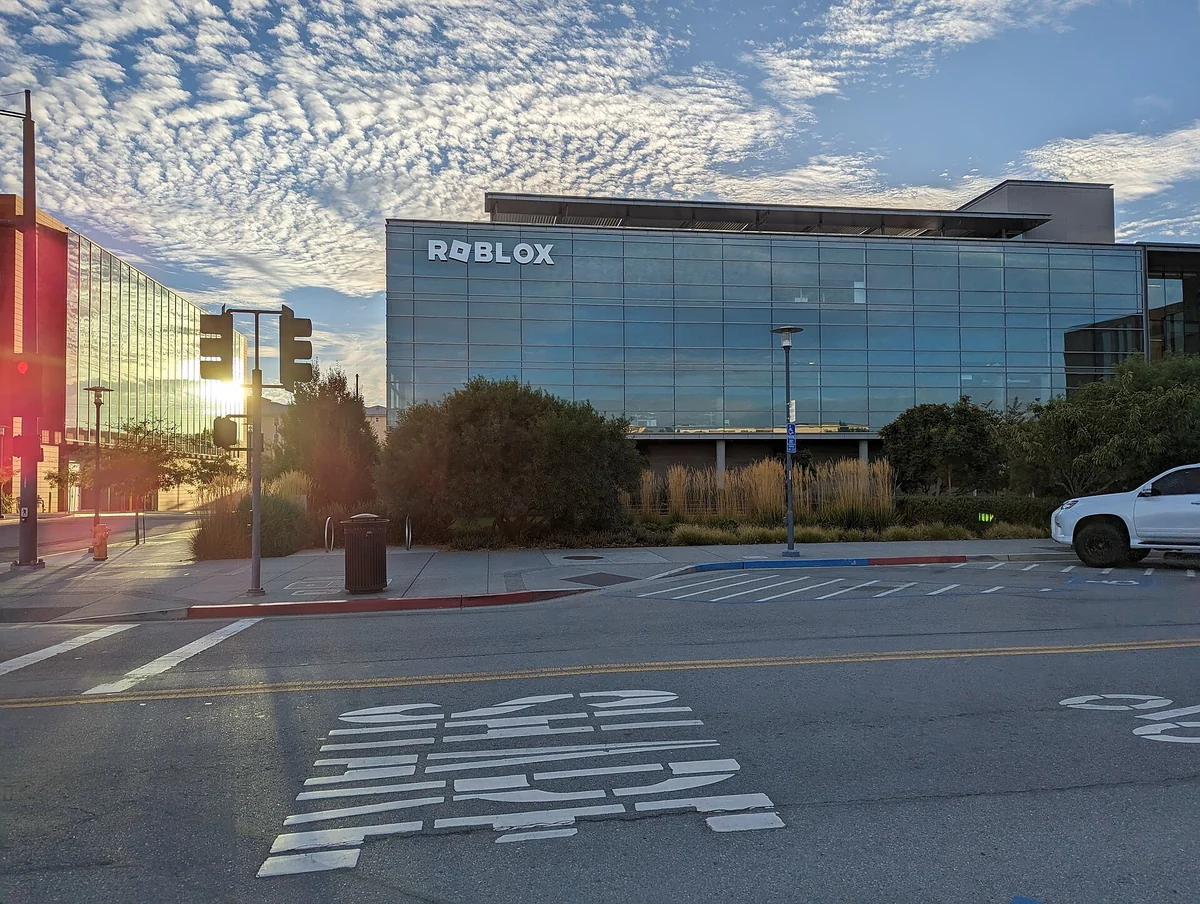
- The headquarters photograph is by Mliu92 and is used from the Wikimedia Commons original under CC BY-SA 3.0. This article uses the 1,920×1,446 JPEG supplied by Wikimedia Commons without altering its content. The same license applies to redistribution of this copy.
- Roblox and related marks belong to Roblox Corporation. This independent article is not sponsored or endorsed by Roblox.