iPhone Duo vs. Galaxy Z Fold8: The Complete U.S. Buyer Comparison

Apple’s first foldable iPhone has turned a specialized category into a direct platform decision. U.S. shoppers can now compare the new iPhone Duo with Samsung’s already-shipping Galaxy Z Fold8, two phones built around 7.6-inch inner displays but designed for very different ecosystems.
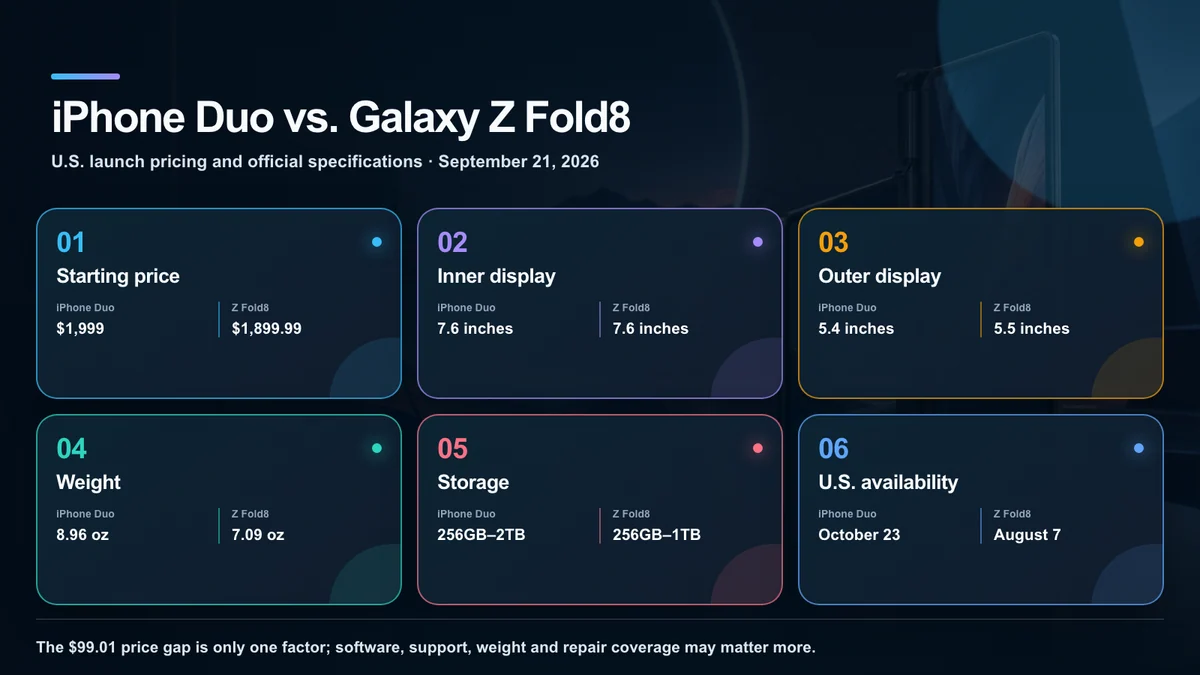
The headline price difference is only $99.01 at 256GB. The ownership difference is much larger. Weight, outer-screen shape, water and dust protection, multitasking software, insurance, repair access and the devices you already own may determine which phone is actually less expensive to live with.
U.S. price and availability
iPhone Duo starts at $1,999 before sales tax. Apple offers 256GB, 512GB, 1TB and 2TB configurations in Night Sky and Star White. U.S. preorders open October 16, with availability beginning October 23, 2026.
Galaxy Z Fold8 starts at $1,899.99 for 256GB, $2,099.99 for 512GB and $2,499.99 for 1TB before temporary discounts or trade-in credits. Samsung began general U.S. availability on August 7. Carrier promotions can make either phone look much cheaper, but those offers may require a specific plan, installment term, eligible trade-in and continued service.
Compare the full amount you will pay over the required service period, not only the monthly number. Add sales tax, insurance, deductible, case, charger and any early-upgrade balance.
The same inner size does not mean the same shape
Both phones list a 7.6-inch inner display. iPhone Duo uses an 1878-by-2670 folding OLED panel with ProMotion up to 120Hz, a nano-texture finish and up to 3,000 nits of peak outdoor brightness in specified conditions. Its 5.4-inch outer display shares the inner panel’s aspect ratio so content can scale more consistently when the device opens.
Galaxy Z Fold8 uses a 2448-by-1848 Dynamic AMOLED 2X inner panel with a 4:3 aspect ratio and refresh rates up to 120Hz. Its 5.5-inch outer display uses a 10:16 ratio. Samsung positions that compact outer screen for messages, social apps and short sessions, while the inner display handles reading, video, games and web browsing.
The 0.1-inch outer-display difference tells very little about reach, keyboard space or app layout. Try the actual banking, work, navigation, authentication and car apps you use. A foldable earns its price only when those apps behave well on both screens.
Weight may be the biggest hardware difference
iPhone Duo weighs 8.96 ounces. It measures 0.21 inch thick when open and 0.44 inch when closed. That is impressively thin for a large folding device, but the total weight remains higher than many conventional phones.
Galaxy Z Fold8 weighs 7.09 ounces—1.87 ounces less than iPhone Duo. It measures about 0.18 inch open and 0.38 inch closed. Add a case and the difference can become even more noticeable during reading, one-handed outer-screen use and long camera sessions.
Multitasking follows two operating-system philosophies
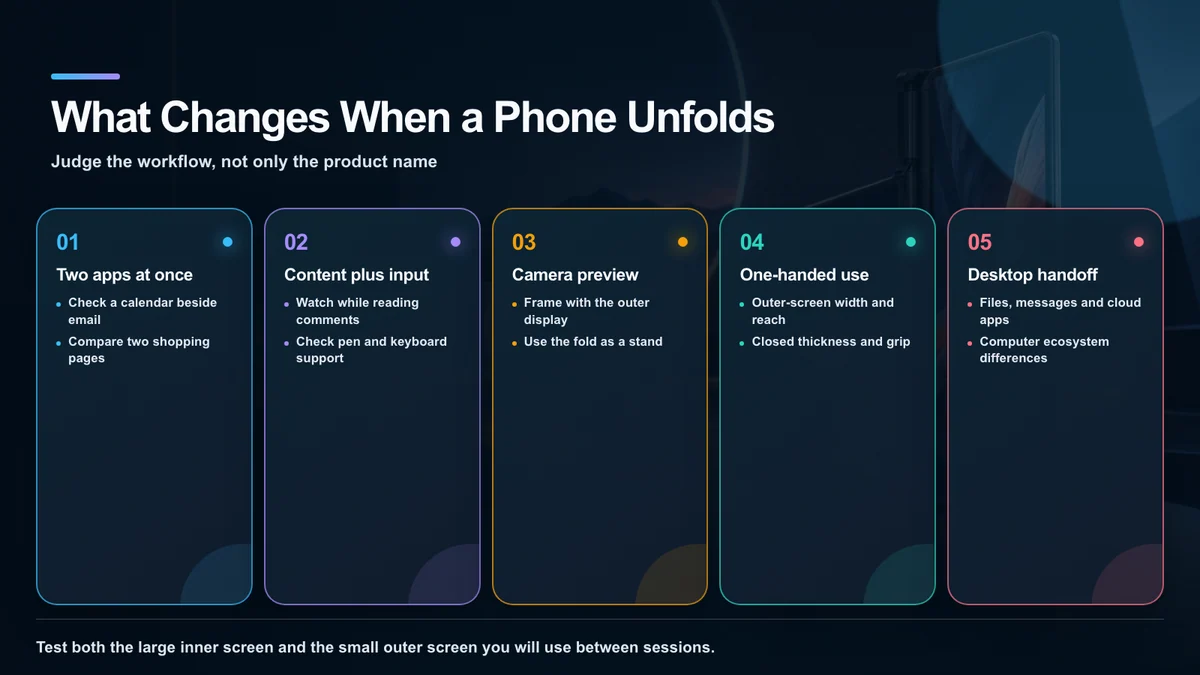
iOS 27.1 gives iPhone Duo a new Split View that can place two apps side by side. Users can open two windows from the same app, switch one side quickly and save useful app pairs. Apple also shows Siri AI working beside on-screen content. Apple Pencil (USB-C) support adds another input option, though buyers should verify how their preferred note, drawing and document apps support it.
Galaxy Z Fold8 ships with Android 17 and One UI 9. Samsung combines split-screen layouts, drag and drop, Galaxy ecosystem features and Samsung DeX. The company also describes Gemini Intelligence automations that can coordinate delivery, reservations, shopping and scheduling across more than 40 apps.
An iPhone, Mac, iPad, Apple Watch, AirPods and iCloud household has a strong reason to stay with Apple. A Windows PC, Galaxy Watch, Galaxy Buds and DeX workflow favors Samsung. Feature counts matter less than continuity across the devices and services you use every day.
Performance and storage
iPhone Duo uses the A20 Pro with a six-core CPU, seven-core GPU and dual 16-core Neural Engine. Apple pairs it with a vapor chamber and a two-battery design intended to sustain performance while powering two displays. Storage ranges from 256GB to 2TB.
Galaxy Z Fold8 uses Snapdragon 8 Elite Gen 5 for Galaxy, with 12GB or 16GB of memory depending on configuration. Storage ranges from 256GB to 1TB, and the battery is rated at 4,800mAh.
Chip names do not settle the comparison. Sustained game performance, heat, app reloads, cellular signal and the percentage of time spent on the inner display affect real experience. Independent battery and thermal testing after iPhone Duo ships will be more useful than launch-stage claims.
Cameras: two different dual-camera systems
iPhone Duo has a 48MP main camera and a 48MP ultrawide camera. The main sensor provides an optical-quality 2x crop, while total digital zoom reaches 10x. The folding design enables an outer-screen preview, rear-camera selfies and hands-free framing when the phone is partly open.
Galaxy Z Fold8 combines a 50MP wide and 50MP ultrawide rear camera, plus 10MP cameras on the cover and inside. It also offers a sensor-based 2x option and up to 10x digital zoom.
Neither phone has a dedicated long telephoto lens. Buyers who regularly photograph sports, concerts or distant subjects should not treat a high megapixel number as a replacement for optical reach.
IP68 versus IP48
iPhone Duo is rated IP68 under IEC 60529, with Apple specifying laboratory testing at a maximum depth of 19.7 feet for up to 30 minutes. Galaxy Z Fold8 is rated IP48. The first digit indicates protection against solid objects larger than 1 millimeter; the second digit indicates immersion protection under the manufacturer’s defined conditions.
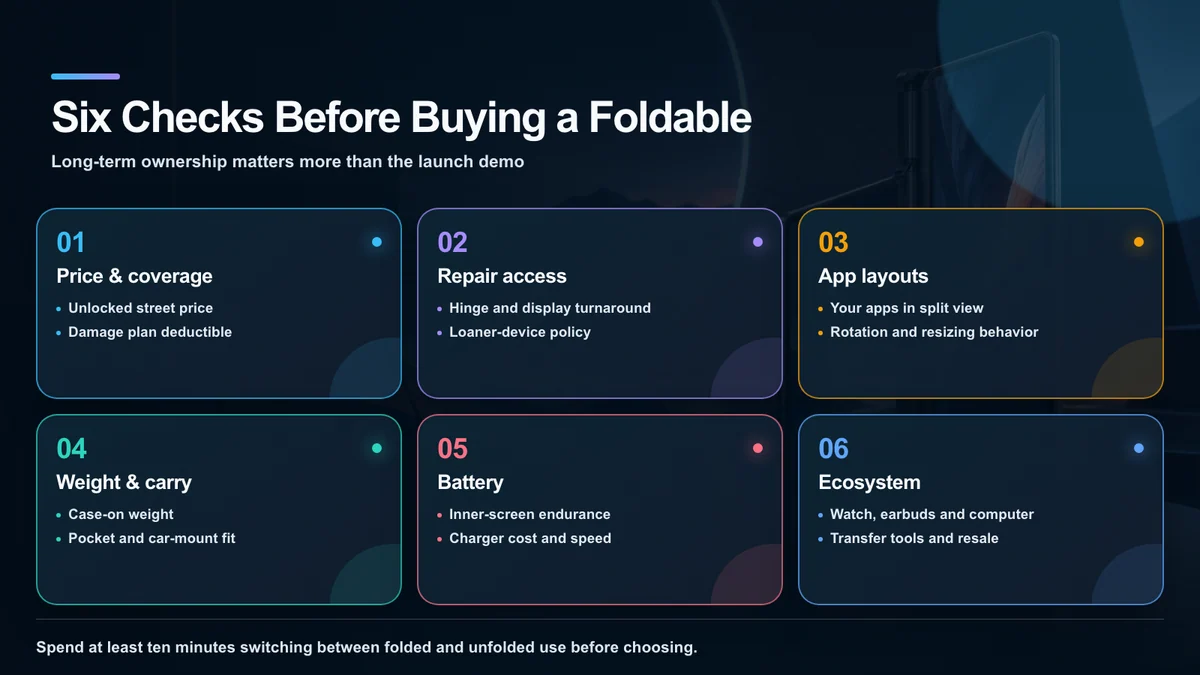
Neither rating makes water damage impossible, and water resistance can decline through wear, impact and repair. A foldable also has an expensive inner display and hinge. Read AppleCare+ and Samsung Care+ terms for inner-display damage, hinge damage, deductible, replacement limits and repair turnaround before purchase.
Battery claims are not directly comparable
Apple rates iPhone Duo for up to 44 hours of video playback on the outer display or 31 hours on the inner display. With a 60W-or-higher adapter, Apple says wired charging can reach 50% in about 20 minutes; compatible MagSafe charging can reach 50% in about 30 minutes under its test conditions. Power adapters are sold separately.
Samsung publishes a 4,800mAh battery capacity for Galaxy Z Fold8. A capacity number and Apple’s playback-hour test are not equivalent measurements. Brightness, 5G conditions, camera use, gaming and inner-screen time will have more influence on an individual day.
Who should buy which phone?
iPhone Duo is the stronger fit for a buyer who wants to keep an Apple-centered setup while gaining the largest iPhone display, Apple Pencil support, iOS apps and Siri AI in a folding form. The tradeoffs are the $1,999 starting price, 8.96-ounce weight and first-generation product risk.
Galaxy Z Fold8 is the stronger fit for someone who values the lower starting price, 7.09-ounce weight, mature Android multitasking, DeX and a device that has already reached U.S. stores. Its compact outer screen, IP48 solid-particle rating and dual-camera design still need to fit the buyer’s priorities.
Bottom line
Galaxy Z Fold8 wins the simple price-and-weight comparison: it starts $99.01 lower and weighs 1.87 ounces less. iPhone Duo answers with deeper Apple integration, up to 2TB of storage, Apple Pencil support and an IP68 rating.
The better choice depends on what happens between the exciting moments when the phone is open. Test typing and navigation on the outer screen, verify your essential apps in split view, compare insurance deductibles and confirm local repair access. Once iPhone Duo reaches stores on October 23, side-by-side battery, heat and camera testing will make the decision much clearer.
Official product image and copyright
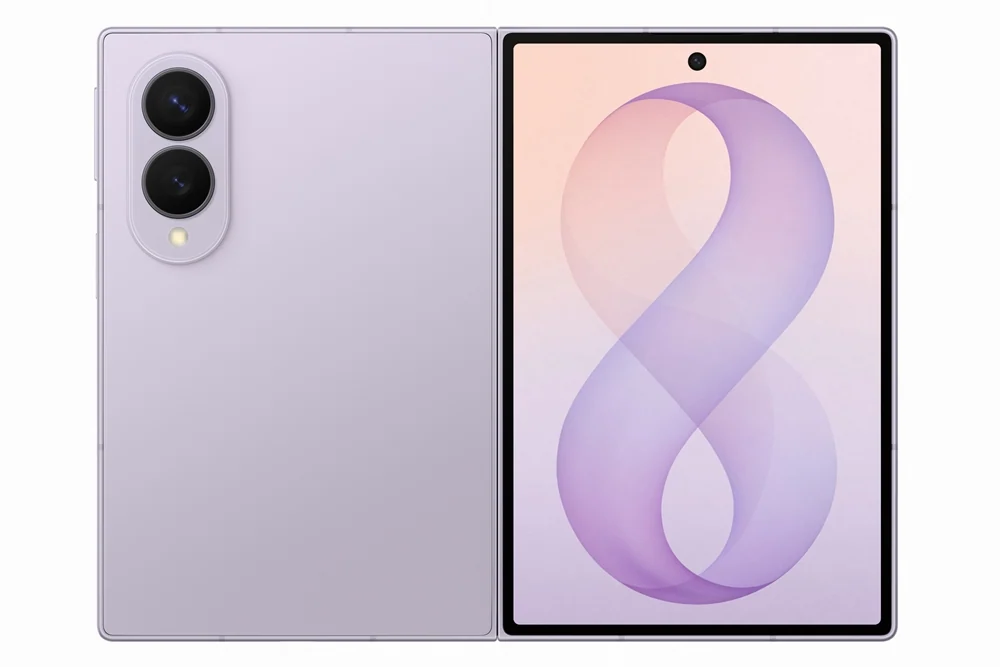
- The product image above is an unmodified file published by Samsung Newsroom Korea. Samsung’s content-use notice permits reuse of material produced directly by the newsroom with attribution and prohibits alteration. The original appears in Samsung’s Galaxy Z Fold8 announcement.
- The hero and comparison graphics use fictional foldable-device concepts and do not depict a real product from either manufacturer.
- Apple, iPhone, iOS, Galaxy and related marks belong to their respective owners. This independent article is not sponsored or endorsed by either manufacturer.
Sources
- Apple Newsroom: Apple unveils iPhone Duo
- Apple: iPhone Duo technical specifications
- Samsung US: Galaxy Z Fold8 pricing and configurations
- Samsung Newsroom: Galaxy Z Fold8 specifications and global launch